Welcome to Our Puppy Blog!

Welcome to our blog! I am a small hobby breeder of Schnoodle puppies. My Schnoodles are a cross of the White Schnauzer with a Red Poodle. These dogs do not shed, are great for allergy sufferers, are friendly and easily trained.

We have 4 breeding females and sell our puppies face to face as required by APHIS rules for hobby breeders.


Our breeding dogs are from purebred Akc lines and the Schnoodle puppies are registered with ICA (the registry for Designer breed dogs.)

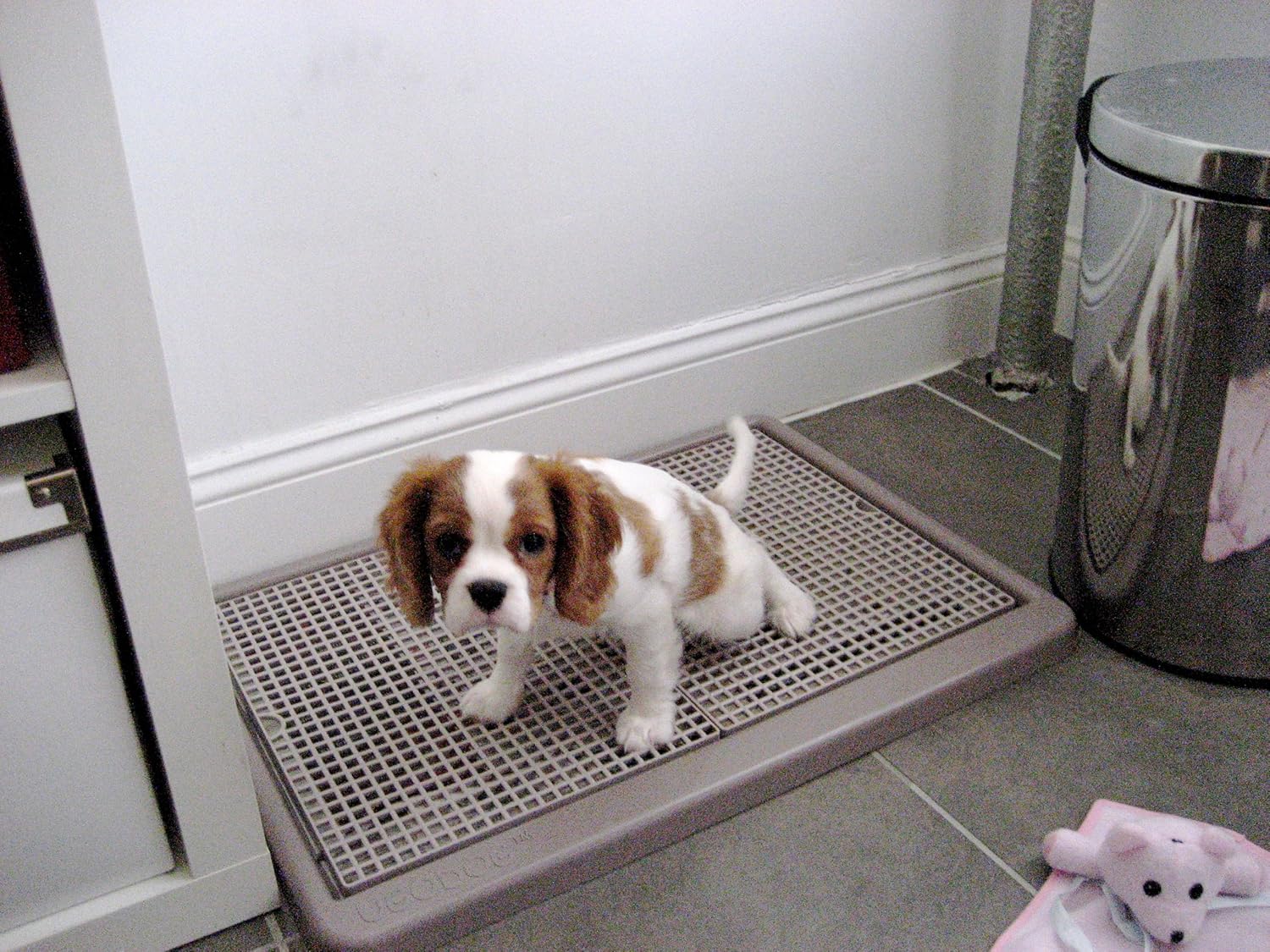
They will be vet checked, have their first set of shots, and they have been using a Ugodog Potty tray from 4 to 8 weeks. But this is just the beginning! Read through our posts to see the special care and attention we give our litter. You will enjoy watching our Growing Puppies!

We sell our puppies through our Waiting list. To reserve your spot on the Waiting List requires a $250 deposit. If you have any questions please email me at GrowingPuppies@gmail.com

Visit www.SchnoodlePuppy.weebly.com for more information on buying a puppy.

Friday, February 15, 2013

A Guide to Choosing Toys and Chews

When you visit the pet section of most stores, the number of wonderful little toys is a feast for the eyes.  Bright colors, unusual shapes and sizes....so many cute things, I want to buy them all!  But a look at the price tags quickly brings me to reality.  Rather than spend a fortune its best to make smart choices.
Avoid toys made of thin rubber.

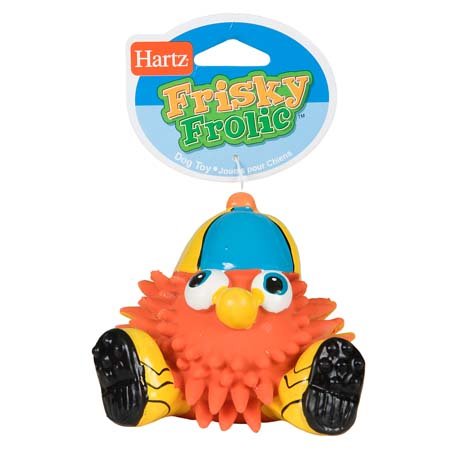
So what's the big deal about buying toys?  Wouldn't a trip to the dollar store for a bunch of small squeeky things do the trick.  Actually that could be a disaster.  The first thing you  should consider when buying a puppy toy is safety.  You don't want to buy a toy that is meant for children and find the rubber is so soft your doggy tears pieces off, or pulls out the squeekers.  What if he swallowed some of these parts?  It could mean a trip to the veterinary.

The first rule of thumb is to buy toys for dogs that are meant for dogs.  Next find a toy that is breed appropriate.  I owned a Border Collie many years ago.  There were very few toys on the market that would not be destroyed in the first few minutes....His jaws were that strong.  I quickly figured out that sturdy rubber balls, and heavy duty Kong toys (the largest sizes) were the only kind that were safe for him.

With a miniature Schnoodle you buy a totally different kind of toy than a Border Collie.  Your puppy won't like the large tough rubber toys that the working dogs need.  The great part is there is a very large range of fun toys that are available for the miniature size Schnauzer or Schnoodle.

Things to consider:

1.  Choose the right size.  Small toys are good, as long as they are not too small that they can be ingested.

2. Make sure there are no detachable parts.  This includes ribbons strings, plastic eyes...and especially squeekers.  The metal part that squeeks on some rubber toys also can be swallowed.

3.Don't buy a toy with sharp or protruding parts

4. Do buy a variety of chew toys!  The dogs need them especially during teething.  Nylabones are considered the safest bones because they don't splinter...but try to get ones that are not too big and tough for a young puppy.

5. Don't be too beguiled by cute toys.  After all, your dog doesn't care about all the bright colors...your dog doesn't care if his toy looks just like him.  Basically the cuteness won't make a difference to the dog.  And after all isn't your puppy all the cuteness you need?.   
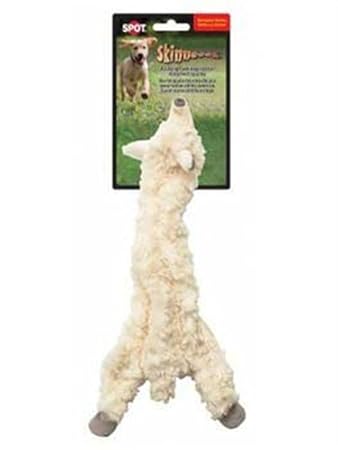
A floppy Wooly sheep...my dogs will love it!

Doggy Toy Stuffed Animals
 
There are many cloth toys made for dogs.  The ones that do not contain stuffing are better than those with stuffing.  Some contain squeekers inside.  These toys need to be checked often, so you can remove the toy if it gets any holes or becomes shredded in any way.   I am very selective about the stuffed animal toys that I buy.  I use them sparingly because don't want them to think they can play with my children's stuffed animals.  We like to use them for games.  For instance, we might hide a soft toy during 'hide and seek' games.  Using the command "Go find the toy!" our dogs will run around in excitement trying to sniff it out. Generally I prefer rope toys to cloth toys...because they last longer.  The dogs still enjoy running with them and chewing on them....but they are not so easily confused with people clothes or kid toys.


Treat Stuffing Toys:

The Kong Company makes the best quality toys for stuffing treats.  These toys can be filled with all kinds of things.  They are a great way to entertain a dog in a confined area, and encourage appropriate chewing.   Some people fill them with kibble, then seal the hole with peanut butter and put it in the freezer.  When they have to leave the puppy in the morning.  They give them a Kong to occupy him for a while and give him his meal that way as well.


When your puppy is a little older you can start experimenting with a variety of other stuffing options for your Kong.  The Kong Company has a large number of homemade recipes your dog is sure to love.  Here are just a few, "Bubbas breakfast" is scrambled egg mixed with cheese.  Diva Dinner is a mixture of Chicken, Carrots, peas, rice and gravy.  That was the menu for our dinner last night!...I could stuff Kongs with our leftovers!  For more Kong recipes, visit.  http://www.kongcompany.com/recipes/   Just keep in mind that not all people food is suitable for dogs.  Dogs for instance are allergic to onions and chocolate.  So research appropriate foods before stuffing them in your dogs Kong.

Recommended KONG Products for Puppies 7 to 12 Weeks:

  • KONG Puppy rubber toys are ideal for training, rewarding, and getting your puppy through that terrible teething phase.
  • Stuff’N Puppy Easy Treat and Stuff’N Puppy Snacks are great for stuffing puppy KONGs.
  • Puppy Wubba is a fun squeaky toy. Your puppy will love to play fetch and tug games with it.
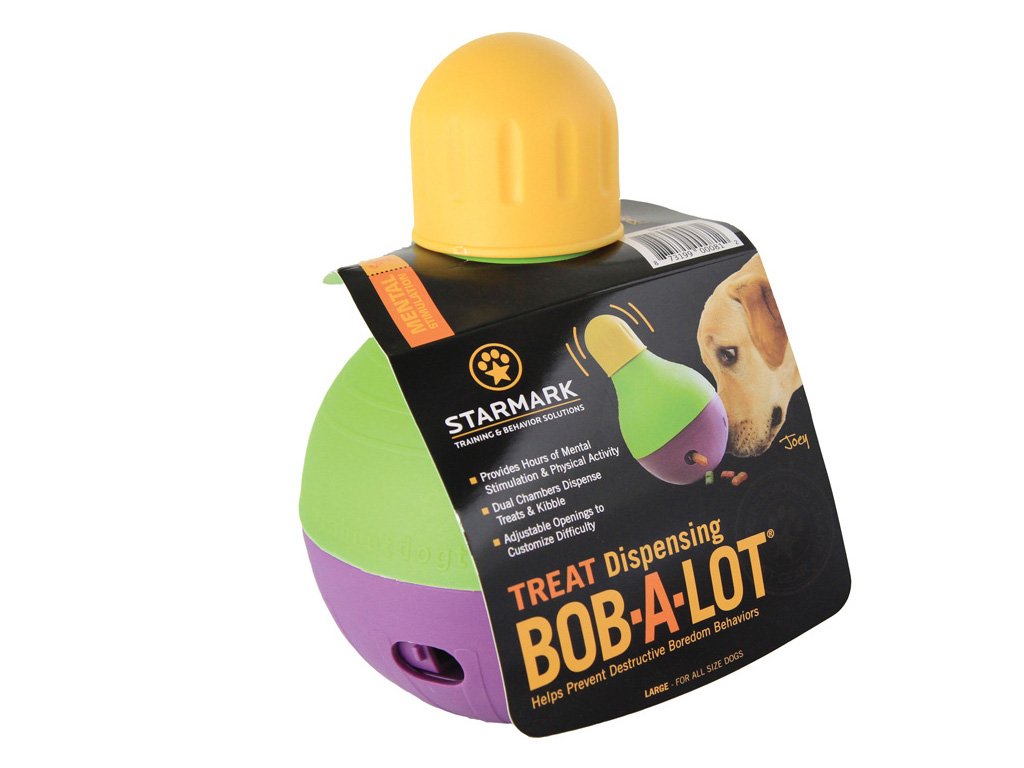
A blog follower recommended this toy...and I have to say, it is ingenious!  The Bob-A-Lot is a Treat Dispenser and Toy all in one.  It releases kibble slowly as the dogs play with it.  Dogs really prefer working for their food, then gobbling it down in 2 minutes and the fun is gone.  Yes, this is now on my wish list!  Thanks for sharing!


Natural Chews:

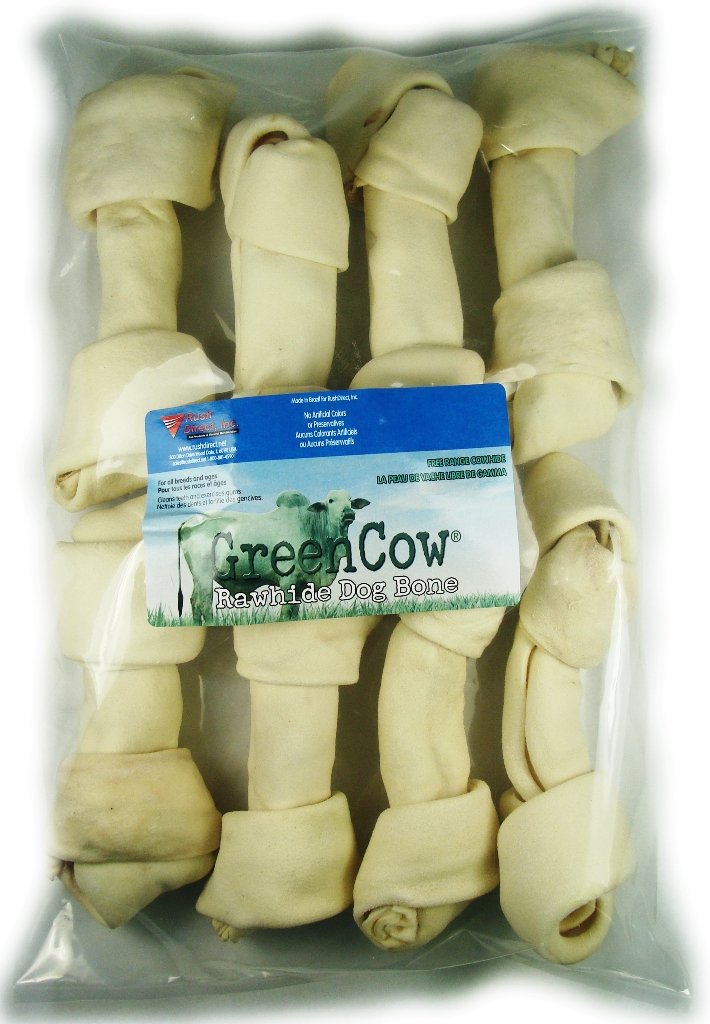
The typical raw hide treat
Rawhide is the most popular chew for dogs.  Rawhide is made from the inner layer of a cows hide.  The soft inner layer is cut and formed into different shapes for dog chews.   This soft hide is not digestible.

There is a lot of controversy over Raw hide chews.  The benefits of the Raw hide chew is that dogs love them, and they satisfy the dogs natural urge to chew, helps with teething and cleans teeth.  The danger is that if the dog chews off a small piece they could easily get lodged in the throat and cause a blockage.  If a blockage results surgery could be required, and if not resolved a blockage can lead to death.   Some say the risks are not very high when you consider the number of dogs that do eat raw hides without any problems....but I still feel there are safer choices.


So if you choose to give your dogs raw hides you must keep an eye on them.  Remove the little pieces that may get broken off.  Remove the rawhide when it gets very small.  We are warned to watch the dog eating the rawhide to remove it if he breaks off pieces small enough to choke on.

Bully sticks
Bones are another very contraversial chew for dogs because they are not digestible and can splinter.  If you do give your dog a bone choose an uncooked thick heavy kind.  The meat dept sometimes offers bones for dogs. dogs.  But never use cooked bones, or chicken bones.  Chicken bones are especially dangerous.  Most of all a greasy smelly beard is a great reason to avoid real bones!
 
A safer alternative to Raw Hides and Bones are the Bully stick.  It is made from ....I know this is disgusting...the bull penis.  They are apparently very appealing to dogs, and fully digestible.  But I have never bought them....yes, they gross me out!

I would also never purchase Bones or Bully Sticks because they are likely to make a dogs beard stinky and smelly.  This is an important consideration with a bearded dog.
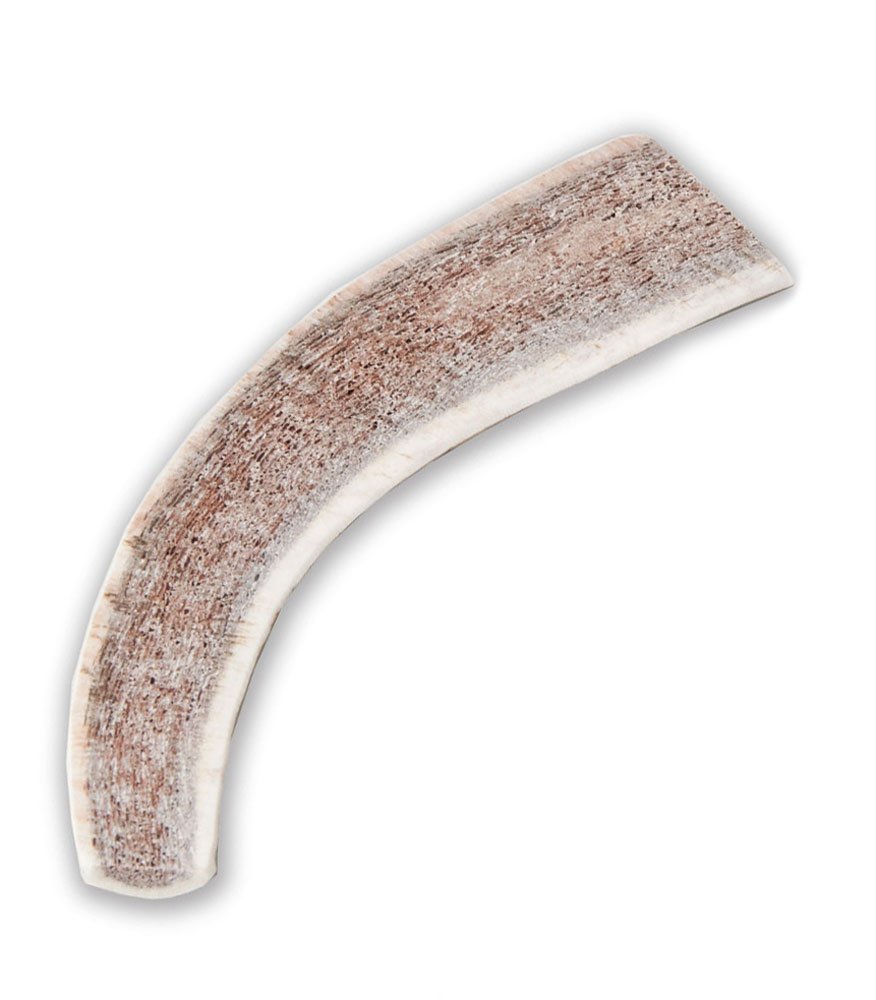
Elk Antler
Some other chews I recently discovered are Antlers and Hooves.  These chews do not leave a dogs beard greasy.  They are cleaner, they don't splinter as readily as bones and my dogs love them.   I have not purchased hooves before, but I understand they splinter more than antlers.  They do work best with small dogs whose jaws are less strong.

Nutritional Chew Treats


Greenies are very popular chew treat intended to also clean a dogs teeth and freshen breath.  I looked into the reviews of this product and they are very popular...but some people have had problems as well. 
-Do NOT give before 6 mths of age. Be sure to give the size that is appropriate for your dog. 
-They are suppose to be digestible, but some instance have occurred where dogs had blockages caused by this treat. 
- The instances are not common given the fact that millions of treats are consumed by dogs every year.  Nonetheless, be cautious with this treat like all chews.  Be sure your dog chews it into small pieces.  If he tends to eat it without chewing sufficiently, then discontinue use. 


 So as you see, there is a whole lot of choices out there for chews and toys.  Buy a variety of different ones so you can rotate them daily for your pup.  By keeping him occupied and interested, he learns to entertain himself alone in a confined space.  This reduces unwanted behaviors, crying, barking and separation anxiety.  By teaching him appropriate chew objects, he is less likely to chew on your valued possessions.   I hope this guide gives you some ideas when choosing your puppy toys!  Check out all my favorite toys and chews in the Our Shop page of our BLOG under the category, Toys and Chews.

. 

Tuesday, February 12, 2013

Happy Memories!


Dixie and her 4 week old Schnoodle pups last June (6-16-2012)

Good Books for Preparing for a Puppy

Every time I prepare for a big event....I start researching ahead of time.  This  is true even when I have been through it several times before.  For example, I have given birth to seven healthy children through natural childbirth (no drugs or intervention) and with every child I prepared ahead of time by studying pregnancy and child birth from beginning to end.   I especially liked the Bradley Method of Childbirth because it focused on good nutrition, physical exercise, and how nature works in the birth process.  By understanding nature, I was better able to know and do what was best for myself and my baby no matter what circumstances occurred.   It is so much better to understand how nature works and work with it.  It is not my way to sit back, do nothing, and then have to react to the problems that occur as they happen.

Just as I prepared for my own children, I also prepare for each puppy whelping.  I read and study as if it was our first litter, to refresh my memory on how to set our mama and her puppies up for whelping success in the beginning.

Now that I am bringing home an 8 week old puppy, the situation is new once more.   I don't rear puppies from 8 weeks to adult every year.  So I like to read new books to refresh my memory of puppy rearing and pick up on new insights and methods.  I want to understand her developmental stages, provide her with her needs and structure her life from the beginning, so we will help her reach her highest potential and avoid any bad habits or behavioral issues for the future.
 
  One of my favorite author for dog rearing, is Dr. Ian Dunbar.  Dr Ian Dunbar has been an animal behaviorist for the past 35 years.  He has written numerous books to share his tried and true approach to dog training.  A big part of his philosophy is understanding developmental stages of dogs and avoiding bad habits before they start.   I had read several of his books with my past dogs, and recently purchased one specifically for new puppies.  Before and After Getting Your Puppy, by Dr Ian Dunbar is comprehensive and common sense.  I have been reading through it over the past several days and enjoying his sound advice.


Dr Ian Dunbars recommendations are consistent with the methods I will be using with my new puppy.  He recommends preparing a puppy confinement area with a crate, a puppy toilet, appropriate chew toys etc.  He discusses the importance of early socialization, house training, chewing and Bite inhibition.  He also addresses common pitfalls, simple commands, tricks and adolescence behaviors.  I am especially interested in this book because it will be a nice summary for my new puppy families to buy for themselves.   Read it before you get your puppy.  I will keep my book on the coffee table.   Hopefully other members of my household will also pick it up for reference.  This books is truly the nuts and bolts of what to do and when to do it with your puppy from 8 weeks through adolescence.  

Monday, January 28, 2013

Critical Periods in a dogs life


CRITICAL PERIODS IN A DOG'S LIFE - DEVELOPMENTAL STAGES

0 to 7 Weeks
Neonatal, Transition,
Awareness, and Canine
Socialization
Puppy is with mother and littermates. During this period, puppy learns about social interaction, plan, and inhibiting aggression from mother and littermates. Puppies must stay with their mother and littermates during this critical period if possible. Puppies learn the most important lesson in their lives - they learn to accept discipline.
7 to 12 Weeks
Human Socialization Period
The puppy now has the brain waves of an adult dog, but his attention span is short. This period is when the most rapid learning occurs. Learning at this age is permanent so this is a perfect time to start training. Also this is the ideal time to introduce the puppy to things that will play an important part in his life. Introduce the puppy to different people, places, animals, and sounds in a positive, non-threatening way.
8 to 11 Weeks
Fear Imprint Period
Avoid frightening the puppy during this period. Any traumatic, frightening or painful experience will have a more lasting effect on the puppy than if it occurred at any other time in it's life.
13 to 16 Weeks
Seniority Classification Period
or The Age of Cutting
Puppy cuts teeth and apron strings! Puppy begins testing who is going to be pack leader. You must discourage any and all biting because such biting can be a sign of dominance. It is important that you are a strong and consistent leader. If formal training is planned, this is the time to begin. Such training will help you establish your leadership.
4 to 8 MonthsPlay Instinct Period
Flight Instinct Period
Puppy may wander and ignore you. It is very important that you keep the puppy on a leash at this time. The way you handle the puppy at this time determines if the puppy will come to you when called. At about 4-1/2 months, the puppy loses his milk teeth and get his adult teeth. That's when puppy begins serious chewing. A dog's teeth don't set in his jaw until between 6 and 10 months. During this time, the puppy has a physical need to exercise his mouth by chewing.
6 to 14 MonthsSecond Fear Imprint Period
or Fear of New Situations
Period
Dog again shows fear of new situations and even familiar situations. Dog may be reluctant to approach someone or something new. It is important that you are patient and act very matter of fact in these situations. Never force the dog to face the situation. Do not pet the frightened puppy or talk in soothing tones. The puppy will interpret such responses as praise for being frightened. Training will help improve the dog's confidence.
1 to 4 YearsMaturity Period You may encounter increased aggression and renewed testing for dominance. Continue to train your dog during this p

Saturday, January 26, 2013

Review of Dog Indoor Potty spots

You all know how much I love a litter box for rearing my brand new puppies.  But as a breeder I am always looking out for ways to improve on the old methods.  Since I will soon have my own puppy, I can trouble shoot a lot of training situations as they occur, and share the solutions that work for us.  And for me, the biggest concern for a new puppy owner, is potty training.  For some people, potty training is so much trouble, they won't get a puppy at all.  Hopefully my upcoming posts will help some of you, learn that it doesn't have to be a source of frustration, for you or your puppy.  For me the first step in potty training is establishing an acceptable indoor potty spot for my new puppy.


Now my puppy does not come from a breeder who uses Litter Boxes like I have.  My breeder uses paper training for her puppy.   I have tried paper with my first litter...and I don't like it.  But I also know that I can't just stick a puppy in a new situation with different smells, looks, and feel, and expect my puppy to know to go potty there.  Whatever I do, I have to transition the puppy slowly from paper to her new situation.

You might ask, why not just teach your puppy to pea outside?  Well, as you Virginians know, it is below freezing right now, and will be most nights until March.  I don't want to take a brand new puppy into freezing weather conditions...its not safe.  But even in warm weather, I feel a new puppy should always have an indoor potty spot.  She will not have full bladder control for several months.  Rather than risk an occasional accident, I want to give her a safe place to pee.  It would be so much worse if she started a habit of peeing on carpets.  That is an expensive nightmare!

 So first I will lay out all the possible options that are available for a Indoor Potty System....old to new....

1 Paper training is the old fashioned method of just having paper on the floor for puppies to wee on.  The problem with paper is that it doesn't absorb urine and feces and the puppies end up walking through it and getting it all over their feet.  Its much harder to keep puppies and their surroundings hygenic.  Most people use paper for as short a time as possible...it is just so dirty and unsightly!

2 Disposable Puppy Pads. are a more modern approach to paper training because instead of paper their is a plastic backed pad with a more absorbent material that draws in moisture like a diaper.  It is an improvement on the paper because it absorbs urine quicker.  But it still leaves feces about for puppies to walk through, and has other problems as well.  The plastic is not biodegradable, so it is very bad for the environment.  Puppies like to tear paper and pads apart which is particularly dangerous with the plastic.  If a puppy ingests the plastic it could cause a serious blockage.  Finally the puppy pads can get rather expensive if you use them for an extended period of time.

3 Whelping Pads are like a puppy pad but they are made of absorbent cloth with a nonabsorbent backing.   You wash them so they can be used many times.  They cost about $22.00 each (more for bigger ones)...and you need to get several, since they need to be washed daily and dried between use.  You will need to have quite a few if this is your puppies only potty spot.  Over time the waterproof backing fails and they need to be replaced. These pads absorb urine well, but the can get pretty yucky if poopies get all over them.  The daily washing can be a drag after a while.   I like the whelping pads to use around a litter tray...in case a puppy misses her mark.   But I don't think it is good to train a puppy pee on the whelping pads..  After all it is just cloth...what is going to stop a puppy from thinking he can pee on some thing else, like a carpet, a blanket, your bed, or some clothes that he may find in your kids room?


4 The Puppy Litter Box is another method.  Most of you are familiar with how well this has worked for me, from past posts on New Puppy Litter Box Training.   I start with Wood Stove Pellets  that are biodegradable, and absorb urine and feces very nicely.  It is safe for the puppies and the puppies stay very clean.  The only problem is that it can get smelly rather quickly and the wood pellets turn to sawdust when they get wet.  Therefore there is a bit of mess when the sawdust gets tracked about by the puppies feet.  Sometime the puppies run through the litter and kick it out of the box.  Then you have sawdust or pellets flying all over the room.  Nothing a broom and dustpan can't handle...but still a bit messy at times.

5. To eliminate odor and cut out the sawdust problem, most of my new puppy owners gradually switch from the Wood Stove Pellets to Second Nature Dog Litter.after they get their puppy home.  These are paper pellets with an odor remover in them.  It is less stinky and a little less messy.  Though the paper pellets can also get messy as they are kicked about by the puppies.  The litter also can get very expensive over time. 

6. Artificial Turf Potty Systems:  There are a surprising number of different potty stystems out there that utilize artificial grass for the puppy to pee on.  A few of these are The Potty Patch for 39.99, or  Spotty Dog Training for $63.00, or  The Porch Potty for $225.00 ...just to name a few.

Its an interesting idea...These systems use artificial grass so the feel on the puppies feet is a little bit like real grass.  The urine flows through the grass to the tray below where it can be emptied.  The idea is that it will be easy to transition to the lawn later.  (I think the feel and smell of real grass is so different, that a puppy wouldn't even associate it with grass....but who knows...we'd have to try it to see)

The main drawback with this system is that the artificial grass captures a lot of germs and bacteria.  Even if you wash it out well with a hose, or soak it in a tub with bleach, reviewers complain that it still has a foul smell.  This is not so bad if you keep it on the porch in the big city.  But the idea for my puppy, is an indoor system.   And indoors the turf does needs to be replaced a lot, there is a lot of clean up and the replacement of turf would definitely get expensive over time.

7.  Next there are potty systems with REAL TURF Grass.  The company is called Fresh Potty.  and for $19 a week, the company delivers fresh turf in a box via Fed EX.    The turf and box is disposable...and you can opt to have it delivered every week, or every other week.  This is definitely the best indoor potty spot to help a puppy transitions to the out doors!.  When you wanted to start outdoor training, all you would need to do is put the natural smelling piece of turf, in the spot you wanted your puppy to use.  He would recognize it as an acceptable potty option because of smell and feel right away.

 And this system wins for ease of use  as well.  There is virtually no clean up.  Just toss the turf in the compost heap, and throw the box in the garbage!   The only draw back is that at $19/week, it would get expensive pretty quick...  On the other hand, when you consider that a lot of people would only need this option for the a limited time period (until full bladder control at 7 mths) it doesn't seem so horrid.  For the dog owner who has been unsuccessful at potty training pups in the past, this could save a lot of money in destroyed carpets and furniture....and frustration!!!

8.  The final potty system I wish to discuss is called a Dog Litter Box toilet.  It uses a grate instead of grass.  There are a few varieties on the market, but the one that looks best to me is called UGODOG. for 49.95 on Amazon.(You go dog!!)  The system combines old fashioned newspaper...or potty pads, with a tray and grate...which eliminates a lot of the problems associated with paper training.  The grate confines the paper away from the puppy paws, and the urine passes through the grate.   Its easy to toss the soiled newspaper and rinse the tray,  and cleaning the grate is much easier than the turf.  There are two grates with each system...so you can put a fresh grate down, while you clean the other grate.  If you use regular newspaper, there is only the one time expense of the system.  So of all the methods (except for Paper training) this one would be the cheapest over the long term!   

So as you can see there are a lot of interesting options out there.   But all of these systems still require a little bit of training!   Can you guess what system I choose for my puppy? (You know it won't be the Paper training!)    I will show you how easy it is to train her to use her new UGODOG indoor potty spot, when I actually have her at home!   So stay tuned!  I promise, this will be exciting!

Why are female dogs so popular

I was just updating the Waiting List for our Summer litter and I was surprised that almost everyone wanted a female.  Since often have an even mix of males and females, it may be well for some of you to reconsider this this question.

Here is what one of my customers recently wrote to me....
"I don’t know that we have a preference on the sex. I really wanted a female when we got our last dog because I thought Females had less issues but our Bruno has been a much nicer and loving dog than the female Schnauzer we had before him so I may be a convert."

Rule of Thumb:

If you already own a dog, you should choose the opposite gender

"Regardless of the breed, most breeders agree that they have no control over the dominating personality traits exhibited by an alpha female. Dominance defines the dog's personality and there is little a breeder or owner can to eliminate this trait. When people are buying a purebred from me I always ask what are the sexes of the other dogs in the home?
An alpha personality generally doesn't show until age 4 months or so and that is long after you have purchased the pup. While they are wonderful loving dogs, they tend to rule the roost! An alpha female is best either alone or with males." 

Do females make better pets?   

There are pros and cons to every gender of dog....But reading the information that breeders share is valuable.  They have the most experience with a large number of males and females .... Here is some information that I have read on several breeding websites...


Male vs. Female, which should I choose? 
FEMALES: In the dog pack, females usually rule the roost, determine pecking order, and compete to maintain and/or alter that order. The females are, as a result, more independent, stubborn, and territorial than their male counterparts.  Females are much more intent upon exercising their dominance by participating in alpha behaviors such as 'humping'.  Humping? Yes, humping.....which in the dog world, is a dominance behavior.  Most fights will usually break out between 2 females because of the dominance struggle. Keep this in mind if you already have a female at home & are thinking of bringing another female into the picture.
Females are usually less distracted during training, and are more eager to get it over with, and get back to her comfy spot on the couch.  They are less likely to wage a dominance battle with YOU, but she can be cunning and resourceful in getting her own way.
They are much more prone to mood swings. Upon their terms, she will come to you for attention when they want it, when she's had enough, she will move away. One day she may be sweet and affectionate-the next day reserved and withdrawn or even grumpy.  The female also has periods of being 'in heat' unless she is spayed. Seasonal heats can be a nightmare-not just for the female, but you and every male dog in the neighborhood. If you are not breeding, you'd be best off to have her spayed, since during this time she can leave a bloody discharge on carpets, couches, or anywhere she goes. She will be particularly moody and emotional during this time. A walk outside during this period can become hazardous if male dogs are in the vicinity, and she will leave a 'scent' for wandering intact males to follow right to your yard, where they will hang out, and 'wait' for days.
MALES: Males are usually more affectionate, exuberant, attentive, and more demanding of attention.  They are very attached to their humans and are always waiting for your attention....and near at hand. They also tend to be more steadfast, reliable, and less moody.  
They are more outgoing, more accepting of other pets, and bond quicker to children.   Most males are easily motivated by food and praise, and so eager to please that training is much easier. However, males can be more easily distracted during training, as males like to play so often.
No matter what age, males are more likely to act silly and more puppy-like, always wanting to play games. Neutered males can exhibit secondary sexual behavior such as 'humping', or 'marking' and lifting of legs. However, once the testosterone levels recede after neutering, most of these behaviors will disappear. Males who are neutered early (by 6 months of age) usually don't ever raise their leg to urinate. Before deciding on male or female, give consideration to any other dogs that may be in or around your home.

My own experience definitely concurs with the above statements on Males and Females.  So do take these things into account when making your choice.  Just like people, males and females are both wonderful!!!   The most important thing of all is to continue the socialization that they have received at the breeders.   Make every effort to expose your dog to a variety of people, pets and experiences and you will be rewarded for years to come.

Saturday, January 19, 2013

Our little bundle of Joy!


Here's some exciting news in our house.   We have purchased a new puppy!    I recently put a deposit on this gorgeous little girl.  She is an AKC white mini Schnauzer from a highly regarded Schnauzer breeding.   She was born on Dec 30 and is expected to grow to  be 10-12 lbs...so she is a small mini.  I can't decide on her name yet.  I like to hold a puppy to see what feels right before I name them.  She is only 2 weeks old...so we have to wait until the end of February to bring her home. 

Monday, November 12, 2012

Halloween Puppy Parade

Maya left, Oscar right
We hope all of you had a fun filled Halloween.  We know that Oscar and Maya did.  These brother and sister pups got to dress up for a Halloween parade.   So nice to know they are still having fun together! Aren't they adorable!!   Thank you for sharing these photos!!!
Oscar, the dragon who won the princess' heart!


Dixie is in heat !!

Here's some important information for all of those waiting for Dixie's next litter....Dixie is currently in heat!   I do not plan to breed a Schnoodle litter this winter.   But it gives us a good idea that Dixie will likely come into heat in early May 2013....litter born early July....going home early September.  Hopefully this information helps you all with your planning.

Dixie enjoys a romp on Oct 25...but she won't be running loose while she is in heat!

An Awesome Temperament !


I got an email from our first litter families.   She gives such a glowing report of her dogs temperament I had to share it.  

Hello there:)
I just came across this email so I thought I would say hello!  Madison is doing VERY well and extremely sweet as usual:)  I still can't believe how much love she has in her little heart!  Their temperament is just amazing to me, never seen any other dog close to that sweet and a lot of people tell me that.  I would love to get a brother or sister for Madison to play with. Do you know of anyone that you trust or is Dixie still having litters?  I can't remember if you are on Facebook but I post pictures of Madison quite a bit and everyone just loves her:)

Madison's Mom
Chesapeake, VA